Official product information
How to Spot a Fake Supplement Review: A Method You Can Reuse
Four checks you can run on any wall of supplement reviews. One is arithmetic and takes thirty seconds, one decides whether a review is evidence at all, and two are prompts to look harder.
Quick answer
Weight the star split yourself: multiply each share by its star value and add the five results. On the block supplied with Renew31 that is 5 × 0.61 + 4 × 0.24 + 3 × 0.09 + 2 × 0.04 + 1 × 0.02 = 4.38, against 4.4 printed above it — so the two agree, and the check is fair rather than a gotcha. Then ask the question that actually decides it: what ties any single review to an order? On this product, nothing does.
4 checks, and only one of them needs arithmetic
Four checks, and the first one takes thirty seconds
A method you can reuse on any product, worked here on a block that passes it.
This is the most useful page on this website for somebody who will never buy this product. It is a method rather than a verdict: four checks you can run on any wall of reviews, for any supplement, in about five minutes, using nothing but the figures the seller prints about itself.
4.38 against a printed 4.4, on this product
One of the four is arithmetic. That is the one to learn
A star split and an average are two descriptions of the same set of reviews, so one has to produce the other. If a page prints both, it has handed you a test it cannot argue with.
It matters that the test is fair rather than a gotcha, so this page works it on the product this site is about — and this product’s block passes. The split weights to 4.38 against a printed 4.4. A check that only ever convicts is not a check; it is a rhetorical device. This one acquits here, which is exactly why it is worth running elsewhere.
01 The method, so you can run it on any product
The division, taught properly, in four steps
Two figures off the page, five multiplications, one addition, one comparison. It works on anything that prints both.
- 01
Turn each percentage into a decimal
Divide by a hundred. 61% becomes 0.61. Do all five, and check they add up to 1.00 — if they do not, the split itself is incomplete and you can stop there.
- 02
Multiply each decimal by its star value
Five stars times its share, four times its share, and so on down to one. On this product: 5 × 0.61 = 3.05, 4 × 0.24 = 0.96, 3 × 0.09 = 0.27, 2 × 0.04 = 0.08, 1 × 0.02 = 0.02.
- 03
Add the five results
3.05 + 0.96 + 0.27 + 0.08 + 0.02 = 4.38. That sum is the weighted average of the split, and it is the only average that split can have.
- 04
Compare it with the printed average
This block prints 4.4 above the split, and 4.38 rounds to 4.4, so the two agree. Allow about 0.05 either way for rounding and no more.
4.6 the ceiling a 61% five-star share puts on an average
A second way to see it, with no multiplication at all
If you would rather not reach for a calculator, ask what a printed average needs. An average of 4.7, say, cannot be reached from a split with 61% at five stars, because even if every remaining review were a four-star the mean would land near 4.6 — and this block prints 15% at three stars or below, each of which pulls the mean down rather than up.
That is the shortcut: the five-star share puts a ceiling on the average, and anything below four stars drags it further. On this product the printed 4.4 sits comfortably under that ceiling, which is another way of saying what the multiplication said.
02 What the arithmetic is for
The useful habit is narrower than suspicion
Not suspect every average. Take the two figures a seller prints about itself and see whether they agree. When they do, you have learned something small and real. When they do not, you have learned that at least one of them was not produced by counting.
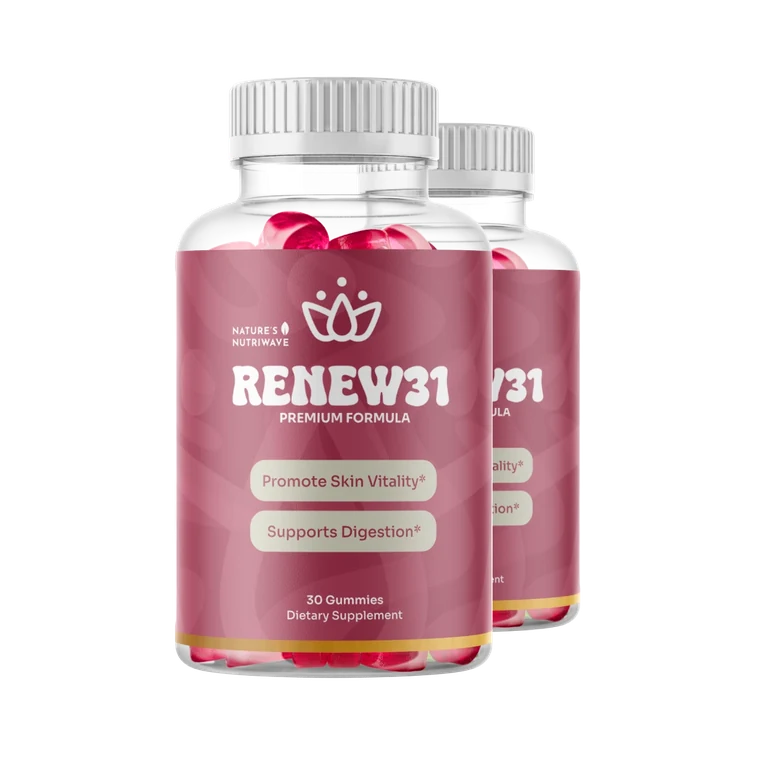
Read the panel before you read the reviews
- 30 gummies a bottle, one a day, 30 days a bottle
- Two bottles $158, three $207, six $294
- A 60-day window from purchase, and 30 days of use asked for as well
- No customer review and no rating is published on this site
The same offer every time this card appears. The pack’s own note beside its figures is to confirm them at the live checkout before you pay.
0 of the ten supplied entries ties to an order
Check two: what ties a review to an order?
This is the question that decides whether a review is evidence at all. Look for an order number, a purchase date, a verified-buyer mark with a stated meaning behind it, or anything a desk could match against its own records.
On the block supplied with this product there is none of that. Ten entries arrived, each with a name, an age, a US city, a rating and a photograph, and not one of them carries anything that connects it to an order. That is why no part of it is republished on the reviews page, even though the arithmetic passed.
Not an order number, not a purchase date, not a delivery record, and not a verified-buyer mark with a stated meaning behind it. The seller holds the order records that would settle it.
03 The weakest of the four, and the easiest to misuse
Check three: does the set look counted, or designed?
A counted set is lumpy. Real ratings cluster oddly, cities repeat, some entries are short and unhelpful, and not every rating is the top one. A designed set is smooth: an even geographical spread, a tidy distribution, an age range that covers the target market without gaps.
This is the weakest of the four checks and the easiest to get wrong, because a tidy set can be real and a lumpy one can be fabricated. Treat it as a prompt to look harder at check two, never as a conclusion.
2 claims on the front of this bottle, both asterisked
Check four: do the review claims outrun the label?
“*These statements have not been evaluated by the Food and Drug Administration. This product is not intended to diagnose, treat, cure, or prevent any disease.”
Read what the reviews say the product did, then read the front of the bottle. If the reviews describe a condition going away and the label makes only support claims with a disclaimer under them, the review wall is making claims the manufacturer did not.
On this product the front of the bottle carries two structure/function claims, each with an asterisk resolving to the sentence above. Anything a review adds to that is the reviewer’s, not the label’s.
1 decisive check, one that decides, and two prompts
The four checks, side by side
| Check | What you need | What a pass means | What a fail means |
|---|---|---|---|
| 1. Weight the split | The star split and the printed average | The two figures were produced by the same count, probably. This product passes. | At least one of the two was not produced by counting. The only check that is close to decisive. |
| 2. What ties it to an order | An order number, a date, or a verified-buyer mark with a stated meaning | The seller can match the review to a purchase, and so could anybody it shows the records to. | The review is unverifiable from outside. This product fails this one, on all ten entries. |
| 3. Counted or designed | The set itself, read as a set | Nothing. A tidy set can be real. | Nothing on its own. It is a reason to look harder at check two. |
| 4. Claims against the label | The reviews, and the front and back of the bottle | The reviews are describing what the label claims. | The review wall is making claims the manufacturer did not, which is a question for the seller. |
One check is arithmetic and close to decisive. One is about records and is the one that actually decides whether a review is evidence. Two are prompts.
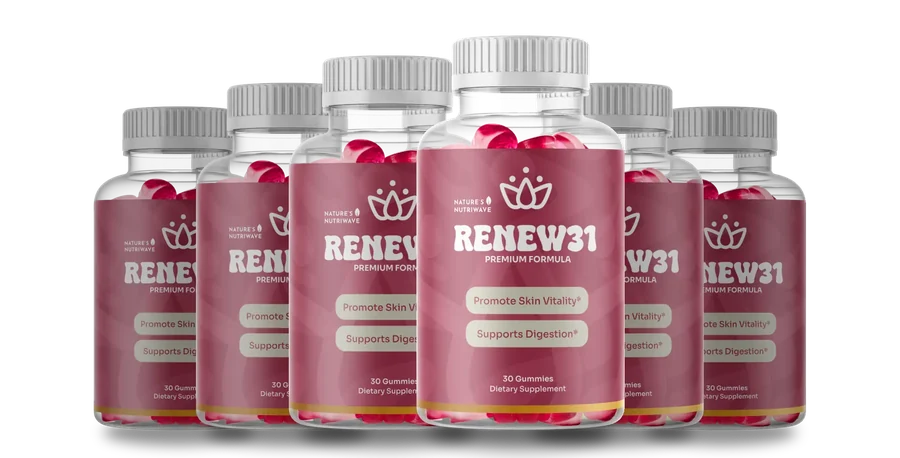
Six bottles is a hundred and eighty days at $49 a bottle
- 30 gummies a bottle, one a day, 30 days a bottle
- Two bottles $158, three $207, six $294
- A 60-day window from purchase, and 30 days of use asked for as well
- No customer review and no rating is published on this site
The same offer every time this card appears. The pack’s own note beside its figures is to confirm them at the live checkout before you pay.
2 of the four are deliberately not run on this product
Worked here: one passes, one fails, two are not run
It is the shape most honest answers take, and it is worth setting out in one place.
Worked on this product: what passes
- Check one passes. 4.38 from the split against 4.4 printed above it
- The seller’s figures agree with each other, and the seller gets the credit for that
- It is the one external test this desk could run on the commercial side of this product
- It is reported first rather than last, because a page that only reports failures is not reporting
And what fails, or is not run
- Check two fails. Nothing in the supplied set ties any of the ten entries to an order
- So none of them is publishable and none is published — no name, no city, no age, no rating, no day count, no sentence
- Checks three and four are not run here, because running them would mean reproducing the content of the reviews
- The ten photographs appear once at the foot of the reviews page with nothing beside them
0 of the four checks says anything about a product
The ceiling on the whole method
None of the four checks tells you whether a product works. A review wall that passes all four is still a review wall: it tells you what buyers said, not what the product did, and no quantity of satisfied buyers is a clinical result.
The things that decide what you are buying are on other surfaces entirely — the Supplement Facts panel, the price, the guarantee wording — and on this product those are where the harder findings are. The blend page is where the 430 mg question sits, and the pricing page is where the struck-through $179 is divided out.
04 The honest limit of check one
A pass is consistency, not verification
And one caution about the arithmetic itself, because it cuts both ways. A split that weights correctly is consistent, not verified. If somebody fabricates a distribution and then computes its average honestly, the check passes.
That is not a reason to skip it — it costs thirty seconds and it catches the carelessness that is far commoner than the care — but it is a reason not to treat a pass as a guarantee of anything beyond the two numbers themselves.
The one-line version. Weight the split, compare it with the printed average, and then ask what ties any single review to an order. The first question is arithmetic and takes thirty seconds. The second is the one that decides whether a review is evidence, and on most products in this category nobody has answered it.
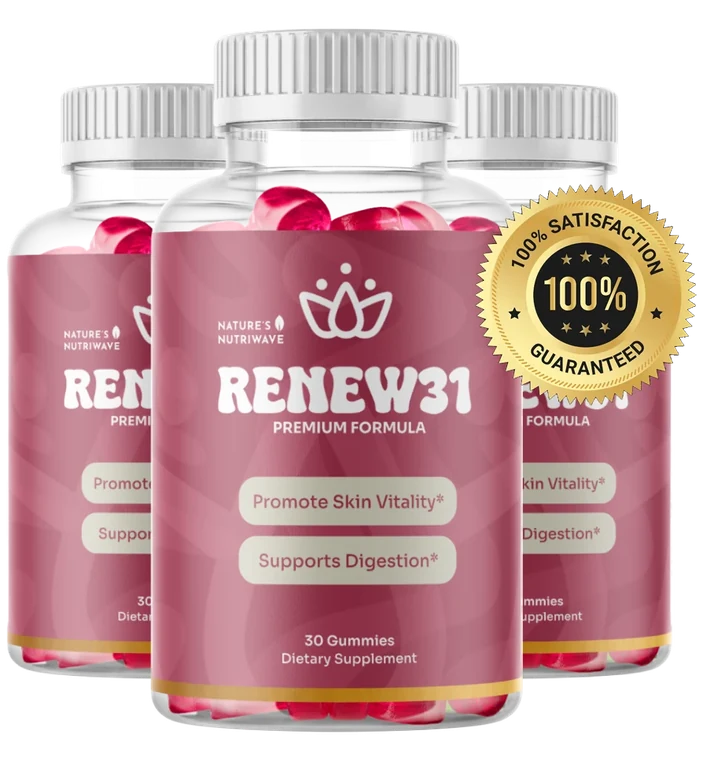
The panel, the price and the window are the surfaces that decide
- 30 gummies a bottle, one a day, 30 days a bottle
- Two bottles $158, three $207, six $294
- A 60-day window from purchase, and 30 days of use asked for as well
- No customer review and no rating is published on this site
The same offer every time this card appears. The pack’s own note beside its figures is to confirm them at the live checkout before you pay.
7 steps, and the whole thing takes five minutes
Seven steps, on any review wall anywhere
0 of 7 run on any review wall
Nothing is stored and nothing leaves this page. The method is reusable and it is free: run it on the next supplement page you land on, whoever is selling it, and run it on this one.
05 What to do with what the method finds
Six outcomes, and what each one is worth
A pass is worth a little. A fail on provenance is worth a lot. Neither is a verdict on a product.
Questions
Renew31 FAQ: spotting fake reviews questions
Is there any proof that Renew31 works?
There is no trial of the product. There are published trials of some of its ingredients, and every studied amount that exists is larger than the whole 430 mg blend — chicory root inulin at 12 g a day is about 28 times it. Four of the nine have no established oral amount for anything on this label at all.
What would prove Renew31 works?
A trial of this formula, at these amounts, in the outcomes the front of the bottle names, with a control group. No such trial exists in the supplied material. Short of that, printing an amount for each of the nine and a strain for the probiotic would at least make the question answerable.
Is Renew31 a scam?
Nothing supplied to this desk supports that word, and this site does not use it. What can be said: the label exists, the distributor is named with a street address, the prices were supplied, the guarantee terms were supplied, and the seller’s own star split agrees with its own average. What can also be said: nine of ten amounts are unprinted, the struck-through figure works out at $179 a bottle across all three packs, and nothing ties any of the 539 supplied reviews to an order.
Why is Renew31 struck through at $179 a bottle?
Nobody supplied a reason, and here is the arithmetic that raises the question. The struck-through totals are $358, $537 and $1,074. 358 ÷ 2 = 179. 537 ÷ 3 = 179. 1074 ÷ 6 = 179. One figure of $179 a bottle sits behind all three packs. FTC’s 16 CFR 233.1(a) makes a former price a legitimate comparison “If the former price is the actual, bona fide price at which the article was offered to the public on a regular basis for a reasonably substantial period of time”. This site does not say that $179 is fictitious. Whether it was ever a bona fide offering price is a question of fact about this seller’s history that nobody has shown this desk.
Why does this site criticise the label and credit it on the same page?
Because both are true and a page that only attacks is not trustworthy either. This label prints a blend total, prints a CFU figure, carries a complete caution, names its distributor with a street address and an email, and prints the FDA disclaimer under both front claims. Those are credits and they appear in the same voice as the findings against the product.
Does this site earn money if I buy Renew31?
Yes. A link from this site to the sales page may earn a commission, which is exactly why the editorial rules are written down and dated, and why the pages that would be warmest — the reviews page and the medical review byline — are the two that ship empty.
References
Sources for this page
- U.S. Food and Drug Administration. Health Fraud Scams. www.fda.gov. Accessed October 12, 2026.
- U.S. Food and Drug Administration. Facts About Dietary Supplements. www.fda.gov. Accessed October 12, 2026.
Next
Keep reading
The block this method was worked on
The arithmetic in full, what it proves, and why none of the testimony is published.
Read itThe same habit, on a struck-through figure
Divide the struck-through total by the bottles in the pack and see what falls out.
Read itThe rules behind the refusal
What this site will not publish at all, and why the medical review block ships empty.
Read itRead the panel before you read the reviews
30 gummies a bottle, one gummy a day, thirty days a bottle. One ingredient itemised at 500 Million CFU and nine more inside a single 430 mg blend with no amounts of their own. Two, three or six bottles at $79, $69 or $49 a bottle, and a 60-day window from purchase. Order support +1 (302) 200-3480.
From $49 a bottle by pack size · 60-day window from purchase, and 30 days of use asked for · ships from inside the US · order support +1 (302) 200-3480