A genuine reassurance
NCCIH: “Probiotics have an extensive history of apparently safe use, particularly in healthy people.” It is printed here because it is true.
Official product information
What NCCIH, ODS and FDA publish about supplements sold for skin and about probiotics for digestion — including the page on skin rejuvenation that does not exist, and the consumer monographs that disappeared in July 2025.
Quick answer
NCCIH publishes a page on skin conditions — eczema, psoriasis, acne and rosacea — and no page at all on dietary supplements for anti-ageing or skin rejuvenation. On the digestion half there is a figure: 500 Million CFU is 0.5 billion, below the 1-to-10-billion range ODS describes for supplements and a quarter of the 2 billion CFU a day used in the published Bacillus coagulans trials in gut symptoms, and no strain is named, so it cannot be matched to them. Three of the ten ingredients have a federal consumer page under their own name; six appear only inside an NIH monograph, because MedlinePlus withdrew its herb and supplement information on 29 July 2025; one has nothing anywhere. FDA does not approve or pre-review any of it.
6 reasons to ask before you open it
Nothing else on this page is more important than this, and no supplement is.
This page is about the category rather than this one bottle, and it opens with the part of it that is not a shopping question at all. Everything below comes from NCCIH, NIH’s Office of Dietary Supplements, FDA, MedlinePlus and the NIH LiverTox and LactMed monographs, quoted rather than summarised, and read on the date printed at the foot of this page.
Two groups of people should put this bottle to a clinician before they open it, and the label says so itself. The caution printed on the bottle, word for word: “If you are under a physician’s care or taking medication, consult your healthcare professional before using this product. If you are pregnant or nursing, or have a known medical condition, do not use without consulting a physician.” That is a complete caution and the label gets credit for it. The federal record adds a reason of its own, and it is the reason this list sits at the top of the page rather than at the bottom. Nothing below predicts harm to anybody. It names the people for whom the answer to should I is a conversation rather than a purchase.
8 of the nine amounts are not on the bottle
A reader who wants to raise an interaction cannot quote a dose, which is what makes this category harder than it looks.
Those six are the ones the label’s own caution and the babchi monograph between them put first. A second and slower list follows from the federal pages on the individual ingredients, and these are reasons to raise it with a clinician rather than reasons to stop at the counter. Diabetes, or anything taken for blood sugar, because NCCIH on fenugreek says “Large doses may cause a harmful drop in blood sugar.” Warfarin, because NIH LactMed on fenugreek says “It can also interact with warfarin to cause bleeding.” A severe illness or a compromised immune system, because NCCIH says “The risk of harmful effects from probiotics is greater in people with severe illnesses or compromised immune systems.” Asthma and eczema, for the fenugreek and dandelion lines quoted on the ingredients page. None of those is a prediction about any reader. Each one is a federal sentence about something that is in this blend, and the useful thing to do with it is to read it out to a pharmacist.
This matters more on this product than the ingredient list alone would suggest, and the reason is the 430 mg. A reader who wants to check an interaction cannot check a dose, because eight of the nine amounts do not exist on the label. A pharmacist asked about fenugreek and warfarin will reasonably want to know how much fenugreek, and the honest answer is that nobody outside the manufacturer knows: it is somewhere between a trace and 430 mg, and it is the fourth-heaviest of nine. Take the bottle itself to the conversation rather than a list copied off a website, so the person you are asking can see the panel and the caution and decide what they need. If you are already taking it, nothing here tells you to stop; it tells you to ask.
4 counts, and two of them are absences
A “skin and gut” supplement is sold on a pairing rather than on a claim. The promise is that something swallowed daily will show up in the mirror and settle the digestion at the same time, and the category has grown around collagen, probiotics, botanicals with a dermatology reputation, and prebiotic fibres. This product is a clean example of the shape.
2 claims on the front, both asterisked
“Promote Skin Vitality*”
“Supports Digestion*”
Both are structure/function claims, neither names a disease, and the asterisk resolves on the back to “*These statements have not been evaluated by the Food and Drug Administration. This product is not intended to diagnose, treat, cure, or prevent any disease.” That is the careful way to build a front panel, and it should be said before anything else. The first is printed Promote rather than Promotes, which is a proofing slip and nothing more.
0 NCCIH pages on supplements for skin rejuvenation
NCCIH publishes a page called Skin Conditions at a Glance. It covers eczema, psoriasis, acne and rosacea — conditions, not appearance. A reader looking for the federal view on swallowing something to look younger will not find a page that addresses it, because none exists.
That is not a finding against this product or any other; it is the shape of the record, and it is worth knowing before a purchase rather than after.
3 federal sentences, quoted rather than summarised
What the skin page does carry, even though it does not carry the question this product is sold on.
“If you’re considering a dietary supplement, remember that “natural” does not mean “safe.””
“Some dietary supplements may have side effects, and some may interact with medications or other dietary supplements.”
“Some skin conditions may be signs of an underlying medical issue.”
1 federal document mentions the powder, and it is a liver monograph
“Psoralen (sor’ a len) is a natural furocoumarin found in the seeds of Psoralea corylifolia”
A reader who searches those three words at ODS, NCCIH or MedlinePlus finds nothing. The plant appears in the federal record in exactly one place, and nobody shopping for a skin gummy would think to look for a page called Psoralen.
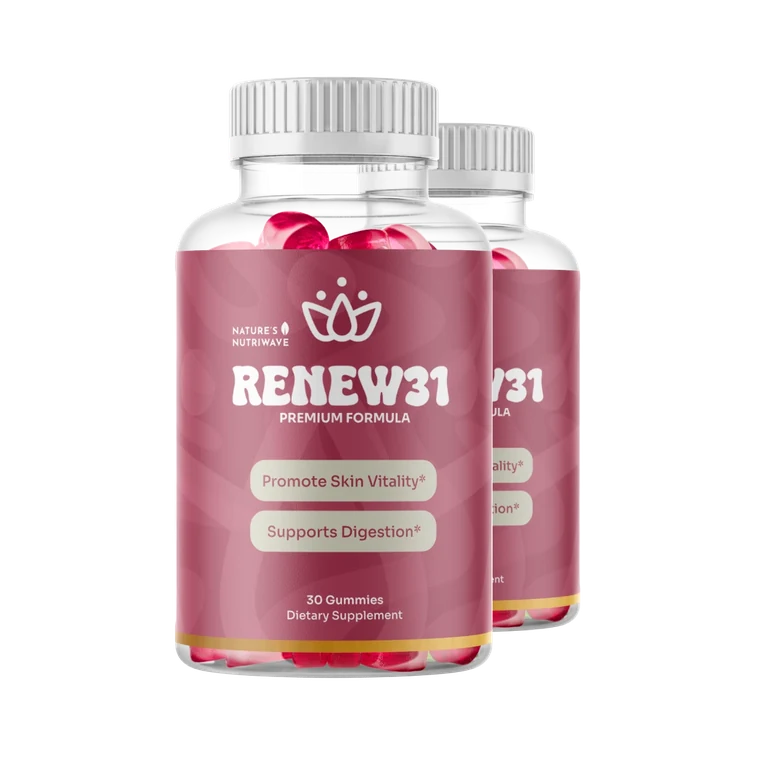
The same offer every time this card appears. The pack’s own note beside its figures is to confirm them at the live checkout before you pay.
0.5 billion CFU, against a range that starts at 1 billion
ODS describes the usual range for supplements as 1 to 10 billion CFU a dose, so this gummy sits below the bottom of it. The digestion half of this bottle is the half with a number on it, which makes it the only claim here that can be audited from outside.
| Where | What was used | In whom | For how long |
|---|---|---|---|
| Published trial | 2 billion CFU a day, named strain | 136 adults with IBS | 8 weeks |
| Published trial | 2 billion CFU a day, named strain | 70 adults with functional bloating | 4 weeks |
| This bottle | 500 Million CFU, no strain named | — | — |
Four times what is here, in both trials, and in named strains. The label prints genus and species and no third word, which closes the door on matching this gummy to either of them.
3 words name a probiotic, and this label prints two
“Probiotic microorganisms are named by their genus, species, and strain.”
“Higher CFU counts alone do not necessarily mean that the product has greater health benefits.”
NCCIH says the same thing from its own side: “Different types of probiotics may have different effects.” Genus and species are printed; the third word is not.
One line has to sit beside all of that or the report is unfair, and it is the second quotation above. The low count is a fact worth reporting, and a bigger number would not have been a promise.
3 sentences, and all three cut the same way
All three come from the same two agencies, and all three are things a buyer should want to know about.
“However, in most instances, we still don’t know which probiotics are helpful and which are not.”
“There are currently no formal recommendations for or against the use of probiotics in healthy people.”
“Because some of these supplements may not have been studied, any potential health effects they have may not be known.”
2 credits, and one caution
NCCIH: “Probiotics have an extensive history of apparently safe use, particularly in healthy people.” It is printed here because it is true.
FDA, on the unit itself: “We believe that CFUs provide a useful description of the quantity of live microbial dietary ingredients.” That is about quantity rather than benefit, which is exactly how this site uses the figure.
NCCIH says “The risk of harmful effects from probiotics is greater in people with severe illnesses or compromised immune systems.” and ODS says “The FDA has reported that probiotics might cause infections or even life-threatening illness in preterm infants.”
Two absences close the digestion half. There is no federal consumer page for Bacillus coagulans anywhere — general probiotic pages at NCCIH and ODS, and nothing about this organism — and the figure itself is a figure at the time of printing: ODS notes “It is worth noting that the number of CFUs in a probiotic can decline over time.”
3 of 10 with a page under their own name
| Ingredient | On the panel | Where it appears in the federal record | Coverage |
|---|---|---|---|
| Bacillus coagulans | Itemised | General pages only | Inside a monograph, or a general page |
| Chicory Root Inulin | 1st of nine | None | Nothing anywhere |
| Babchi Powder | 2nd of nine | LiverTox, under Psoralen | Inside a monograph, or a general page |
| Fennel Seed Powder | 3rd of nine | NIH LactMed | Inside a monograph, or a general page |
| Fenugreek Powder | 4th of nine | NCCIH | A page of its own |
| Ginger Root Extract | 5th of nine | NCCIH | A page of its own |
| Lemon Balm leaf Extract | 6th of nine | NIH LiverTox | Inside a monograph, or a general page |
| Lion’s Mane Powder | 7th of nine | NIH LiverTox | Inside a monograph, or a general page |
| Slippery Elm Bark Powder | 8th of nine | NIH LiverTox | Inside a monograph, or a general page |
| Dandelion Leaf Powder | 9th of nine | NCCIH | A page of its own |
Three full, six half, one empty. The six half rows are not ingredients that failed a federal review — they are ingredients whose only federal mention sits somewhere a consumer would not search.
1 hatched rail, and it is the heaviest of the nine
Chicory root inulin is first of the nine by the label’s own ordering and has no federal consumer page anywhere.
Full: a federal consumer page is published under that ingredient’s own name, which a shopper can find by typing the word into a search box. Half: the ingredient appears in the federal record only inside an NIH LiverTox or LactMed monograph, or on a general page about a category rather than about it. Hatched: nothing at ODS, NCCIH, MedlinePlus or LiverTox. Three full, six half, one empty.
01 The same count, in words
Coverage, counted honestly. Three of the ten ingredients have a federal consumer page published under their own name — fenugreek, ginger and dandelion, all three at NCCIH. Four appear in the federal record only inside an NIH monograph a consumer would not think to look for: babchi inside LiverTox’s page on Psoralen, fennel inside LactMed, and lemon balm, lion’s mane and slippery elm inside LiverTox pages of their own. Chicory root inulin has no federal consumer page anywhere — ODS, NCCIH, MedlinePlus and LiverTox were all checked and none exists; the only federal document is a labelling guidance about dietary fibre. And Bacillus coagulans has no species page anywhere: there are general probiotic pages at NCCIH and ODS, and nothing about this organism.
6 of 10 ingredients, and it has a date on it
That notice is the structural finding on this page. It is nobody’s fault and it is not a criticism of the product.
One piece of context explains why so many rows on these pages read no federal consumer page, and it is recent. MedlinePlus prints this at the top of what used to be its herbs and supplements section: “As of July 29, 2025, the herbs and supplements information from the Therapeutic Research Center (TRC) Natural Medicines Comprehensive Database is unavailable.” For six of these ten ingredients, the federal consumer layer that existed until July 2025 is gone. That is not the seller’s fault and it is not a criticism of the product. It is the reason a reader who goes looking for babchi or chicory inulin or slippery elm on a government site in 2026 will find less than they would have found in 2024, and it is why the LiverTox and LactMed monographs do so much of the work on these pages.
The same offer every time this card appears. The pack’s own note beside its figures is to confirm them at the live checkout before you pay.
3 sentences, quoted rather than summarised
Before any of the above means anything, one thing about the whole category has to be straight.
“The FDA does not approve dietary supplements for any purpose.”
“The FDA does not generally review dietary supplements before they are sold to consumers.”
“In fact, in many cases, companies can produce and sell dietary supplements without even notifying the FDA.”
5 FDA sentences in total
“Dietary supplement companies are responsible for ensuring that their products are safe and accurately labeled.”
“Vitamins, minerals, herbs, and other dietary supplements are not FDA-approved to treat or prevent disease.”
Read those five sentences together and the structure of the market appears. Nothing on this bottle was reviewed by anybody before it went on sale, and that is the ordinary, lawful state of a dietary supplement in the United States rather than a failing of this particular product. NCCIH says the same thing from its own side: “Many probiotics are sold as dietary supplements, which don’t require FDA approval before they are marketed.”
0 database searches run by this desk, and none reported
That is an absence, and an absence is all it is. It is why the absence of an enforcement action is not a clearance.
This desk did not run a database search on this product and does not publish one. No search, no date and no result was supplied, and a sentence of the form a search of such-and-such a list on such-and-such a date did not return this product is worth nothing unless the search was actually done. Separately and relevantly: no FDA action naming babchi, bakuchiol or Psoralea corylifolia was found. That is an absence rather than a clearance, and FDA says of itself that it “does not generally review dietary supplements before they are sold to consumers.” So there is no clearance claimed here, and no absence of one implied either.
02 The category, and the one sentence worth taking from it
FDA publishes a consumer page on health fraud scams, and the category this product is sold into is the one that page describes: a supplement marketed for an appearance claim and a digestive claim, bought online, taken without telling a clinician. The one sentence this site takes from that page, word for word: “Health fraud scams waste money and can lead to delays in getting proper diagnosis and treatment.” The second half is the half that costs something. Nothing on that page names this product, and this site does not suggest otherwise.
2 agencies, and no reporting address was supplied
The actionable part is short and it has two halves. A problem with the product — a reaction, a bottle that does not match its label, a supplement sold as a treatment for a disease — is FDA’s. A problem with the selling — a charge you did not authorise, a subscription you did not agree to, a struck-through figure you think was never a real price — is the Federal Trade Commission’s, and it is the FTC whose Guides Against Deceptive Pricing are quoted on the pricing page of this site. No complaint address or reporting URL for either agency was supplied to this desk, so none is printed here; both publish one, and the FDA pages this site does cite are listed in the sources at the foot of the page. Whatever you report and wherever you report it, it goes better with the order ID and a screenshot in front of you — and the order desk on +1 (302) 200-3480 is the only number in the supplied material that can see an order at all.
The same offer every time this card appears. The pack’s own note beside its figures is to confirm them at the live checkout before you pay.
4 groups the caution names, with no exceptions
“If you are under a physician’s care or taking medication, consult your healthcare professional before using this product. If you are pregnant or nursing, or have a known medical condition, do not use without consulting a physician.”
Notice when the question is not a shopping question. A gummy bought online is a thing you can start tonight without telling anybody, and the one real cost of that is the weeks it can absorb while something that needed looking at goes unreported. The label’s own caution names four groups who should speak to somebody first, and it does not list exceptions.
Two more reasons come from what is in the blend rather than from the label — a liver condition, because the federal monograph that mentions babchi powder is about liver injury, and diabetes or anything taken for blood sugar, because NCCIH on fenugreek says “Large doses may cause a harmful drop in blood sugar.”
430 mg shared nine ways, and one of them is fenugreek
“It can also interact with warfarin to cause bleeding.”
Somewhere between a trace and 430 mg, and it is the fourth-heaviest of nine. A pharmacist asked about fenugreek and warfarin will reasonably want to know how much, and nobody outside the manufacturer can answer.
Take the bottle to a pharmacist rather than a search engine. Bring the panel, not a printout copied off a website, so the person you are asking can see the blend line and the caution and decide what they need. If you are already taking it, nothing here tells you to stop. It tells you to ask.
03 The honest closing
None of which makes this a bad label. It declares a blend total where the regulation requires one. It itemises the probiotic and prints a CFU figure where its own marketing said no figure was printed. It carries a full caution, a stated storage range, a tamper-seal instruction, the FDA disclaimer and a named distributor with a street address.
What the federal record will not do is tell a buyer that any of it does anything for either of the two claims on the front — and on the skin half, it will not even offer a page on the question.
Questions
There is no NCCIH page on dietary supplements for anti-ageing or skin rejuvenation. NCCIH’s skin page covers eczema, psoriasis, acne and rosacea — conditions rather than appearance. It does carry three sentences worth reading first, including “Some skin conditions may be signs of an underlying medical issue.”
NCCIH is direct about the state of it: “However, in most instances, we still don’t know which probiotics are helpful and which are not.” and “Different types of probiotics may have different effects.” ODS adds “There are currently no formal recommendations for or against the use of probiotics in healthy people.”
No, and this is the sentence that has to go next to the one above. ODS: “Higher CFU counts alone do not necessarily mean that the product has greater health benefits.” The low count on this label is a fact worth reporting. A bigger one would not have been a promise.
Because without it nothing can be matched to anything. ODS: “Probiotic microorganisms are named by their genus, species, and strain.” NCCIH: “Different types of probiotics may have different effects.” The published trials used named strains. This label prints genus and species only, so the organism in this gummy cannot be lined up with any trial even if the count were right.
Partly because they never had one, and partly because of a date. MedlinePlus prints “As of July 29, 2025, the herbs and supplements information from the Therapeutic Research Center (TRC) Natural Medicines Comprehensive Database is unavailable.” For six of these ten ingredients, the federal consumer layer that existed until July 2025 is gone. That is not the seller’s fault; it is why the LiverTox and LactMed monographs do so much of the work on these pages.
No, and nothing is. FDA: “The FDA does not approve dietary supplements for any purpose.” and “The FDA does not generally review dietary supplements before they are sold to consumers.” The label prints the correct disclaimer under both front claims.
NCCIH answers this one in its own words: “If you’re considering a dietary supplement, remember that “natural” does not mean “safe.”” And: “Some dietary supplements may have side effects, and some may interact with medications or other dietary supplements.”
References
Next
What the federal record says about every ingredient, and where it says nothing.
Read itThe babchi liver monograph, the fenugreek warnings, and the label’s own caution.
Read itWhat the bottle claims, and what NCCIH, ODS and the NIH monographs publish.
Read it30 gummies a bottle, two a day, thirty days a bottle. Ten ingredients, ten printed amounts, no proprietary blend, and about 430 mg of declared actives a serving. Price and guarantee are read from the live checkout. Order support +1 (302) 200-3480.
From $49 a bottle by pack size · 60-day window from purchase, and 30 days of use asked for · ships from inside the US · order support +1 (302) 200-3480
What this page was checked against
Every figure on this page is either printed on the label or derived from what is printed, with the derivation shown beside it. The medical review sits in the block alongside.
Medical review Dr. Marisa Garshick, MD, FAAD
A slot stays marked until a real person fills it. Nothing on this site is signed by anybody who has not read it. Who reviews these pages?