Babchi Powder, 2nd of nine
No established oral amount for any purpose on this label. The human result that made its constituent bakuchiol famous was a cream: 0.5%, on the face, twice daily, 44 participants, 12 weeks, and no oral arm.
Official product information
Renew31 declares 430 mg for nine ingredients and no amount for any one of them. This page sets out the rule that permits it, the single inference the ordering allows, and the arithmetic that follows: every published studied oral amount this desk could find is larger than the whole blend.
Quick answer
The panel declares a Proprietary Blend of 430 mg with nine ingredients listed under it and no amount against any of them. Declaring only the total is lawful: 21 CFR 101.36(c)(3) requires the total weight of the members and nothing more. What 101.36(c)(2) gives a reader is the ordering, because members must be declared in descending order of predominance by weight — so chicory root inulin is the heaviest of the nine, dandelion leaf the lightest, and each weighs no more than 430 mg. Then the finding: chicory inulin was studied at 12 g a day, about 28 times the whole blend; fennel at 3 g, about 7 times; lion’s mane, fenugreek and ginger each at roughly twice it. Four of the nine have no established oral amount at all, and 430 divided by 9 is 47.8 mg, which is an average and not an amount.
430 mg for nine ingredients, and nothing for any of them
21 CFR 101.36(c)(3) asks for the total weight of the members. This panel gives exactly that, and nothing more is required of it.
Start with the rule, because the rule decides how to read everything else. The panel declares Proprietary Blend, 430 mg and lists nine ingredients indented beneath it. Not one of the nine carries an amount of its own. That is lawful. Say it first, say it plainly, and then get on with what the panel does and does not let a reader work out.
“The quantitative amount by weight specified for the proprietary blend shall be the total weight of all other dietary ingredients contained in the proprietary blend”
One total, and nothing required for the members. The absence of nine individual figures is what the regulation permits; it is not a violation, and this site does not suggest otherwise. So this is not an accusation page. It is an arithmetic page.
2 figures on the whole panel
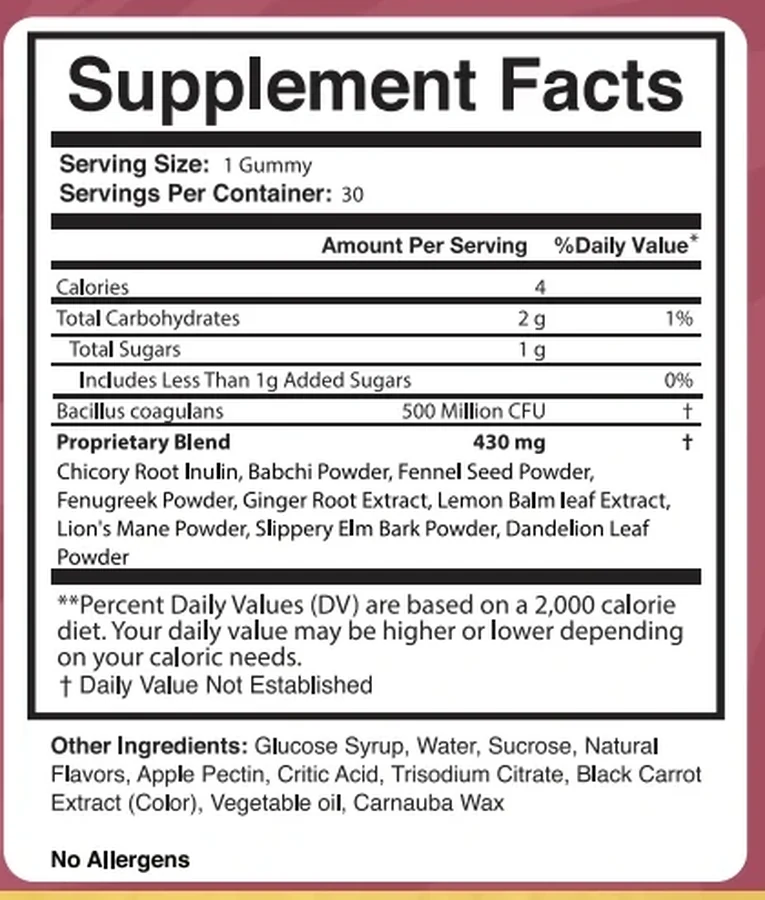
Here is the line itself. Proprietary Blend, 430 mg, † — and then nine names, indented, with nothing beside any of them. The dagger resolves to “† Daily Value Not Established” which is accurate: no Daily Value exists for a botanical blend.
Above it sits the one itemised dietary-ingredient row, Bacillus coagulans at 500 Million CFU, outside the blend. Two figures on the whole panel, and nine ingredients share the second of them.
1 of 9 heaviest, by the label’s own assertion
Inulin first means inulin heaviest. Dandelion last means dandelion lightest. That is the whole of the inference.
“Dietary ingredients contained in the proprietary blend that are listed under paragraph (b)(3) of this section (i.e., “other dietary ingredients”) shall be declared in descending order of predominance by weight, in a column or linear fashion, and indented under the term “Proprietary Blend” or other appropriately descriptive term or fanciful name.”
Descending order of predominance by weight. So the printed order is an assertion by the label about its own contents, and it is the only quantitative statement this panel makes about any individual member. Chicory root inulin is the heaviest of the nine and dandelion leaf powder is the lightest, with the other seven ranked between them in the order printed.
9 ranks, and no figure behind any of them
| Member, as printed | Place in the order | What the order asserts | What the panel says about its weight |
|---|---|---|---|
| Chicory Root Inulin | 1 of 9 | Heaviest of the nine, as the label asserts by listing it first | No amount printed — no more than 430 mg |
| Babchi Powder | 2 of 9 | Heavier than the seven below it, lighter than one | No amount printed — no more than 430 mg |
| Fennel Seed Powder | 3 of 9 | Heavier than six, lighter than two | No amount printed — no more than 430 mg |
| Fenugreek Powder | 4 of 9 | Heavier than five, lighter than three | No amount printed — no more than 430 mg |
| Ginger Root Extract | 5 of 9 | Heavier than four, lighter than four | No amount printed — no more than 430 mg |
| Lemon Balm leaf Extract | 6 of 9 | Heavier than three, lighter than five | No amount printed — no more than 430 mg |
| Lion’s Mane Powder | 7 of 9 | Heavier than two, lighter than six | No amount printed — no more than 430 mg |
| Slippery Elm Bark Powder | 8 of 9 | Heavier than one, lighter than seven | No amount printed — no more than 430 mg |
| Dandelion Leaf Powder | 9 of 9 | Lightest of the nine, as the label asserts by listing it last | No amount printed — no more than 430 mg |
Nine rows, nine ranks, and nine amounts nobody printed. All nine together weigh 430 mg. Each one weighs no more than that.
5 stops, and it works on any blend label
It takes about ninety seconds and nothing in it requires a figure the panel does not print.
On this panel that line is Proprietary Blend 430 mg, with nine ingredients under it and nothing beside them.
The regulation asks for the total weight of the members and requires nothing for the members themselves. This panel has done what the rule asks.
Members must be declared in descending order of predominance by weight. So inulin is the heaviest of the nine and dandelion leaf the lightest, and that is the whole of what can be ranked.
47.8 mg is an average and not an amount. The ordering rule has already told you the nine are unequal, so the average is the one figure the label has guaranteed is wrong for at least eight rows.
Not each ingredient’s share of it: the whole blend. Chicory root inulin was studied at 12 g a day, about 28× the 430 mg total, before the other eight take any share.
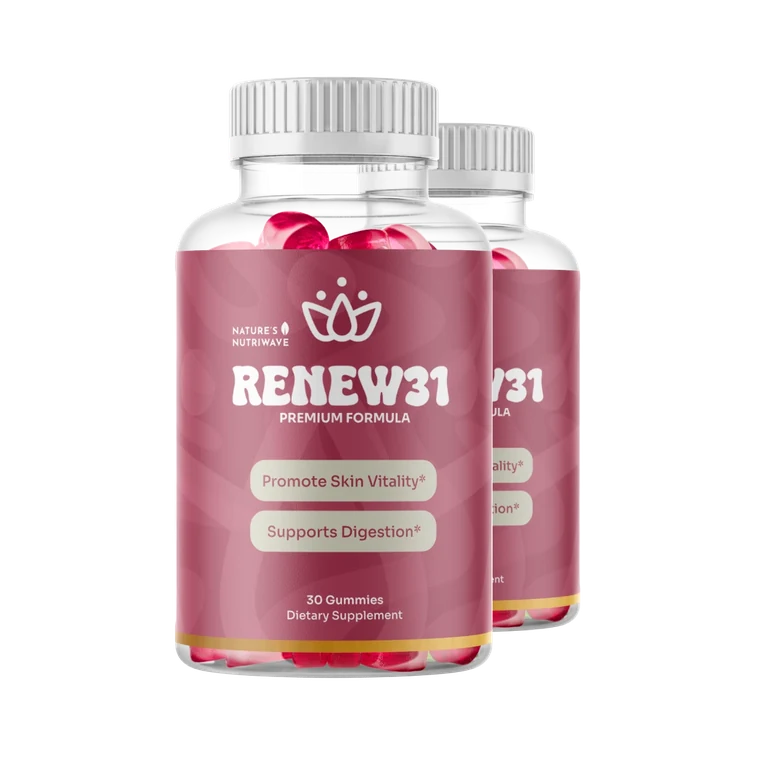
The same offer every time this card appears. The pack adds one instruction beside its own figures and it is the right one: confirm it at the live checkout before you pay.
28× at the widest, on a logarithmic axis
Six bars, one axis, five orders of magnitude. Each bar is the entire 430 mg blend and each mark is an amount somebody published for one of its members on its own.
printed on the label no amount printed amount used in a published study
Every bar is the whole 430 mg blend, because no amount is printed for any single member of it. Every mark is an amount somebody published for that one ingredient on its own. The axis is logarithmic, so each step to the right is ten times the one before it, which is the only honest way to put 430 mg and 12 g on one line. The lemon balm mark is drawn because the amount exists in the record, not because it was measured for either claim on this bottle — it was not. The itemised probiotic row is not on this axis at all, because 500 Million CFU is a count rather than a weight.
5 of 5 comparisons that come out the same way
Twenty-eight times, seven times, and three ingredients at more than twice the weight of all nine put together.
| Ingredient | Lowest studied oral amount | In whom, and for how long | The whole blend | Ratio |
|---|---|---|---|---|
| Chicory Root Inulin | 12 g a day | 39 adults with functional constipation, four-week randomised crossover periods — Puhlmann and others, BMC Gastroenterology, 2025 | 430 mg | about 28× the blend |
| Fennel Seed Powder | 3 g a day | powdered fennel at 3 g daily for 15 days; the populations were lactating women and the durations ran 10 to 15 days | 430 mg | about 7× the blend |
| Lion’s Mane Powder | 1 g as a single dose | a 1 g single dose; chronic use ran 1.8 to 10 g a day — 3 g for 16 weeks in 30 adults, 1.8 g for 28 days in 41, 10 g for 4 weeks in 24 | 430 mg | 2.3× the blend, and up |
| Fenugreek Powder | 1 g a day | the bottom of the galactagogue range: NIH LactMed gives 1 to 6 grams daily and NIH LiverTox gives 2 to 100 grams | 430 mg | 2.3× the blend |
| Ginger Root Extract | about 1,000 mg a day | NIH LiverTox gives up to the equivalent of 1,000 mg of dried powdered extract daily | 430 mg | 2.3× the blend |
| Babchi, slippery elm, dandelion leaf, lemon balm | No established oral amount | No oral amount for any purpose on this label. The well-known human result for babchi’s constituent bakuchiol was a 0.5% cream on the face twice daily — 44 participants, 12 weeks, no oral arm. | 430 mg | Nothing to compare at all |
Every ratio in the last column is the studied amount divided by the blend total — that is, before the other eight members take any share of the 430 mg at all. Four of the nine have no established oral amount for any purpose on this label, so for those four there is no division to do.
3 of 5 studied amounts measured for something else entirely
Be precise about what that table is and is not. It is not a claim that any of these ingredients does anything, at any amount, for either of the two things on the front of this bottle. Three of the five studied amounts in it were measured for purposes that have nothing to do with skin or digestion at all — lion’s mane in cognition, ginger in nausea, fenugreek as a galactagogue.
What the table does is answer the only quantitative question a reader can put to this panel: if a published human study exists for an ingredient on this label, how does the amount it used compare with the amount this label declares? And the answer, in every single case where the comparison can be made, is that the studied amount is larger than the entire blend.
01 The category
This is the strongest piece of arithmetic on the site and it takes one sentence to set up. Every studied oral amount that exists for an ingredient on this panel is larger than the entire blend — not larger than that ingredient’s share of the blend, larger than the whole 430 mg, before the other eight take anything. Chicory root inulin was studied at 12 g a day, which is about 28 times the blend total. Fennel seed powder at 3 g a day is about 7 times it. Lion’s mane at 1 g as a single dose, and 1.8 to 10 g a day in chronic use, starts at 2.3 times it. Fenugreek at 1 g a day, the bottom of the range, is 2.3 times it. Ginger at up to about 1,000 mg a day equivalent is 2.3 times it. And for babchi, slippery elm, dandelion leaf and lemon balm there is no established oral amount for any purpose on this label, so there is nothing to compare at all. Say it once and plainly: every one of those studied amounts exceeds the total weight of the blend, and the blend holds nine ingredients.
12 g vs 430 mg studied, against the whole blend
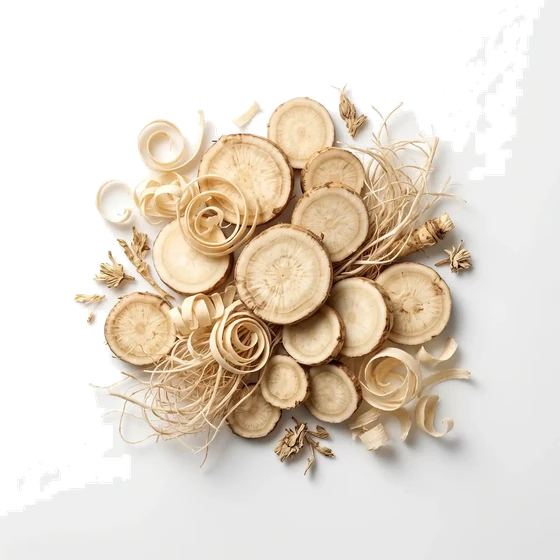
Put the five comparable ingredients in one place, with the whole blend on the other side of each one. Chicory root inulin: 12 g a day studied, against a 430 mg blend — about 28 times the blend. Fennel seed powder: 3 g a day — about 7 times the blend. Lion’s mane: 1 g as a single dose and 1.8 to 10 g a day in chronic use — 2.3 times the blend and up. Fenugreek: 1 g a day at the bottom of the range — 2.3 times the blend. Ginger: up to about 1,000 mg a day equivalent — 2.3 times the blend. Twenty-eight times, seven times, and three ingredients at more than twice. And the blend is not 430 mg of any one of them: it is 430 mg of all nine together, and the four that are not on this list have no studied amount to put beside it.
1 of 9 members, drawn as though it were all nine
The bar in the meter above is a fiction in the product’s favour. Chicory root inulin is not 430 mg of this gummy; it is the heaviest of nine ingredients that together weigh 430 mg. The real figure is smaller than the bar shows and nobody outside the manufacturer knows how much smaller. That is the finding, and it is the reason this page exists.
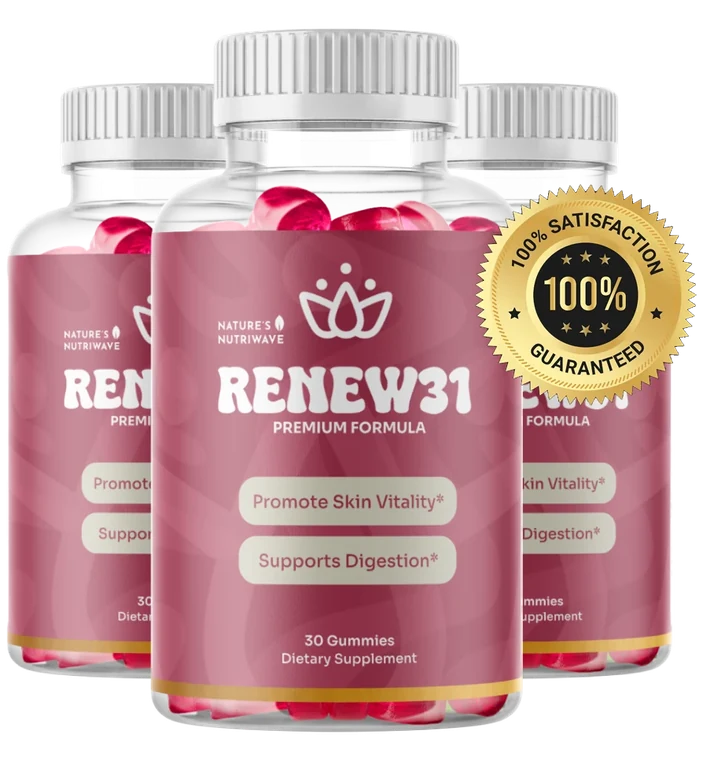
The same offer every time this card appears. The pack adds one instruction beside its own figures and it is the right one: confirm it at the live checkout before you pay.
4 of 9 members with no established oral amount
No figure goes on the right-hand side of a division, so no effect is assigned to any of them anywhere on this site.
No established oral amount for any purpose on this label. The human result that made its constituent bakuchiol famous was a cream: 0.5%, on the face, twice daily, 44 participants, 12 weeks, and no oral arm.
No amount found for Ulmus rubra at all. The 500 mg trials LiverTox cites used Ulmus macrocarpa, a different species, so 500 mg is not a slippery elm dose and is not presented as one here.
Not reliably established. Dandelion is listed last, so by the ordering rule it is the lightest thing in the blend — and NCCIH says “There’s no compelling scientific evidence supporting the use of dandelion for any health condition.”
A different kind of nothing, and reported as one. Studied amounts exist — 1 g and 3 g a day — but none of them was measured for a skin or a digestive claim.
0.5% cream, 44 people, 12 weeks, and no oral arm
Babchi is the skin ingredient on this label and its absence of an oral amount is not an accident of a thin literature. It is a route.
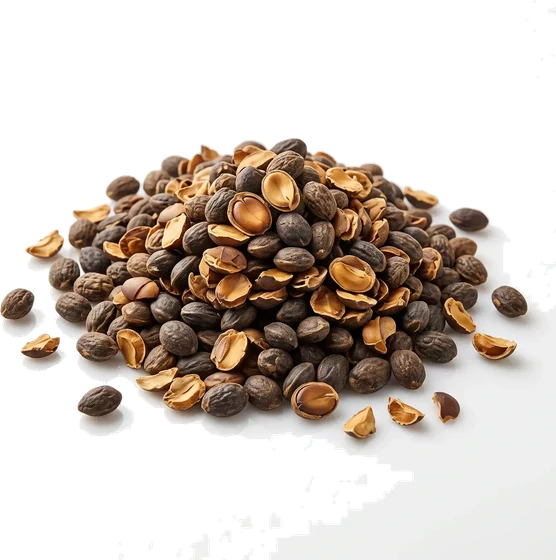
Four of the nine have no established oral amount for any purpose on this label, so for those four there is no figure to set against anything and this site assigns them no effect. They are babchi powder, slippery elm bark powder, dandelion leaf powder and lemon balm leaf extract. Two of the four need a footnote. Lemon balm does have studied amounts in the federal record — 1 g daily for four weeks, 3 g daily for twelve weeks, 330 mg three times daily across two menstrual cycles — but none of them was for a skin or a digestive claim, so none of them is a reference amount for what this bottle is sold for. And slippery elm has no studied amount at all for Ulmus rubra, which is the species on this label: LiverTox cites 500 mg trials, but those used Ulmus macrocarpa, a different plant, and 500 mg is not presented anywhere on this site as a slippery elm dose.
Babchi needs one more sentence than the other three, because its absence of an oral amount is not an accident of a thin literature. The human result that made its constituent bakuchiol famous was a 0.5% cream applied to the face — 44 participants, twelve weeks, and no oral arm at all. This product is swallowed. The one federal document that mentions the powder is NIH LiverTox on Psoralen, which carries “Likelihood score: C (probable rare cause of clinically apparent liver injury)”. Nobody reading this is being told they will be harmed and nobody already taking it is being told to stop: the instruction is to put the bottle to a clinician and ask, and to do that before starting if you take any medication or have any liver condition.
47.8 mg an average, and not an amount
No figure is derived, bounded, estimated or averaged into existence anywhere on this site. Each member weighs no more than 430 mg, all nine together weigh 430 mg, and the order runs heaviest to lightest. Beyond those three statements nothing further is knowable from outside.
No trial of the finished product exists in the supplied material. Every studied amount on this page belongs to a single ingredient, studied on its own, mostly for a purpose that is neither of the two on the front of this bottle.
And the document. A certificate of analysis for the lot on your bottle is the only thing that could put a figure against any of the nine, and for the probiotic it is the document that would name the strain. A lot code and a certificate reference were supplied with this product. The document was not, and how to check a batch sets out what to ask for and what a real one looks like.
0 milligram figures derived for any of the nine
Keep the method rather than the numbers, because the method moves to any label. Find the blend line first. If a panel prints one figure above a list of names, that figure is the whole of what you know about the weight of anything in the list. Then read the order, because the regulation makes the order mean something: heaviest first. Then divide the total by the number of names to get an average, and remember while you look at it that the average is the one number the label has promised you is wrong — the descending-order rule guarantees the members are unequal. On this panel that is 430 mg, nine names, and 47.8 mg as an average nobody printed.
The same offer every time this card appears. The pack adds one instruction beside its own figures and it is the right one: confirm it at the live checkout before you pay.
3 documents the seller already holds or can produce
That is worth holding both halves of: the label has done what the regulation asks, and a reader who wants to check it still cannot. Neither half cancels the other, and this page is not an accusation about anybody who printed this panel.
Questions
It is the total weight of all nine blend members together, which is what 21 CFR 101.36(c)(3) requires. It is not the amount of any one of them. Each of the nine weighs no more than 430 mg; all nine together weigh 430 mg; and 430 divided by 9 is 47.8 mg, which is an average nobody printed and which the ordering rule guarantees is nobody’s actual amount.
Yes. Nine of the ten dietary ingredients are inside it and it is declared at 430 mg with no amount for any member. Only the Bacillus coagulans sits outside it and carries its own figure.
Yes. 21 CFR 101.36(c)(3) requires the quantitative amount for a blend to be “the total weight of all other dietary ingredients contained in the proprietary blend”, and that is what 430 mg is. Declaring only the total is lawful and this site says so plainly. The criticism on these pages is not that a rule was broken; it is that the rule leaves a reader unable to check anything.
Not printed. Babchi powder is listed second of the nine inside the 430 mg blend, so by the descending-order rule it is the second-heaviest of them and no more than 430 mg. No closer figure exists anywhere on the bottle, and there is no established oral amount for babchi for any purpose on this label to compare it with even in principle.
Not printed. It is listed first of the nine, so the label itself is asserting that it is the heaviest of them — no more than 430 mg, and at least as much as any of the other eight. The published human study used 12 g a day, which is about 28 times the weight of the whole blend.
Not printed. It is seventh of nine inside the 430 mg blend, so by the label’s own ordering it is in the smaller end of it. The published human amounts are 1.8 g a day, 3 g a day and 10 g a day, and a 1 g single dose. The smallest of those is about four times the weight of the whole blend.
References
Next
Each row with its federal coverage, its studied amount and its cautions.
Read itEvery printed line, and the four observations about the panel.
Read itWhat the federal pages hold for skin and for digestion, and for which ingredient.
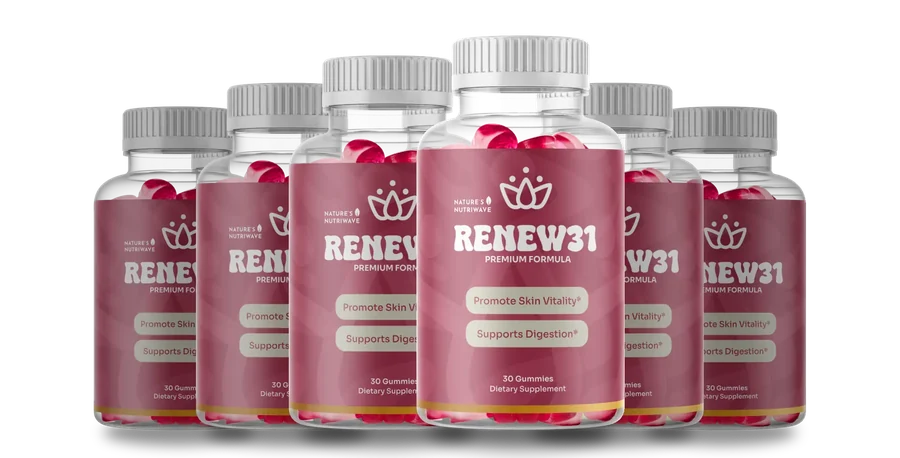
Read it30 gummies a bottle, one gummy a day, thirty days a bottle. The panel itemises Bacillus coagulans at 500 Million CFU and declares a 430 mg proprietary blend holding nine ingredients, not one of which carries an amount of its own. There is no one-bottle pack: two bottles is the smallest offered, at $79 a bottle and $158 in total. The window is 60 days from purchase. Order support +1 (302) 200-3480.
From $49 a bottle by pack size · 60-day window from purchase, and 30 days of use asked for · ships from inside the US · order support +1 (302) 200-3480
What this page was checked against
Every figure on this page is either printed on the label or derived from what is printed, with the derivation shown beside it. The medical review sits in the block alongside.
Medical review Dr. Marisa Garshick, MD, FAAD
A slot stays marked until a real person fills it. Nothing on this site is signed by anybody who has not read it. Who reviews these pages?